

— What the mouth reveals —
The first
biomarker
ignored.
What the mouth reveals
The first
biomarker
ignored.
Alzheimer's, Parkinson's, diabetes, depression, cardiovascular disease: the scientific literature establishes links that clinical practice does not yet exploit.
— P. gingivalis found in the brains of Alzheimer's patients
— 50% of undiagnosed diabetics detectable at the chair
— Oral-gut-brain axis and neurodegenerative diseases
— The dentist as a sentinel of systemic health
— 50% of undiagnosed diabetics detectable at the chair
— Oral-gut-brain axis and neurodegenerative diseases
— The dentist as a sentinel of systemic health
YALHA · What the mouth reveals
Editorial · 03
A word from the founder
The mouth speaks,
before the patient does.
We examine dozens of mouths every day. We see cavities, periodontitis, restorations to redo. But for twenty years, the scientific literature has told us we are also seeing something else, without knowing it: the first signs of systemic diseases no one else will detect in time.
Periodontitis is not only a local disease. It is a chronic inflammatory signal whose markers circulate throughout the body. Porphyromonas gingivalis, our most documented periodontal pathogen, has been identified in the brain tissue of patients with Alzheimer's. Its toxic proteases, the gingipains, correlate with tau pathology. This is no longer a hypothesis: it is a fact published in Science Advances.
In diabetes, the relationship is bidirectional and documented by hundreds of studies. One third of patients seen in a periodontal practice show an HbA1c in the diabetic or pre-diabetic range without knowing it. Chair-side screening, by a simple finger prick, could change the trajectory of millions of patients.
For cardiovascular disease, the excess risk is 19 to 22% in periodontal patients. For depression, the 2025 meta-analysis of 53 studies establishes an odds ratio of 1.30. And the oral-gut-brain axis opens unprecedented perspectives on Parkinson's.
The dentist may be the most regularly consulted healthcare professional in France. We see our patients every six months, sometimes more. We have access to the oral cavity, to saliva, to the oral microbiome. We hold a vantage point no one else occupies with this frequency and biological intimacy.
This volume explores what science already knows, what practice does not yet apply, and what technology now makes possible. Not to turn the dentist into a general practitioner, but to give them the tools of an informed sentinel.
Dr. Jean-Guillaume Capsal
Dental surgeon · CEO, DAM Intelligence
YALHA · What the mouth reveals
Contents · 04
In this
issue.
Volume 04 · The Mouth, the First Ignored Biomarker
-
01
Editorial The mouth speaks, before the patient03
-
02
The signal no one reads Oral biomarkers and systemic diseases: state of knowledge06
-
03
From gum to brain P. gingivalis, Alzheimer's and Parkinson's: the evidence is mounting08
-
04
Screening at the chair Diabetes and cardiovascular disease: the dental practice's potential10
-
05
"Hands Free" module Voice-driven periodontal charting, anamnesis and oral exam, hands-free12
-
06
The mouth and the mind Depression, mental health and periodontitis: a bidirectional relationship14
-
07
Testimonials What they say about it16
-
08
Capsal Tribune The dentist as a sentinel of systemic health18
-
09
Dersot Tribune Periodontitis is not a local disease20
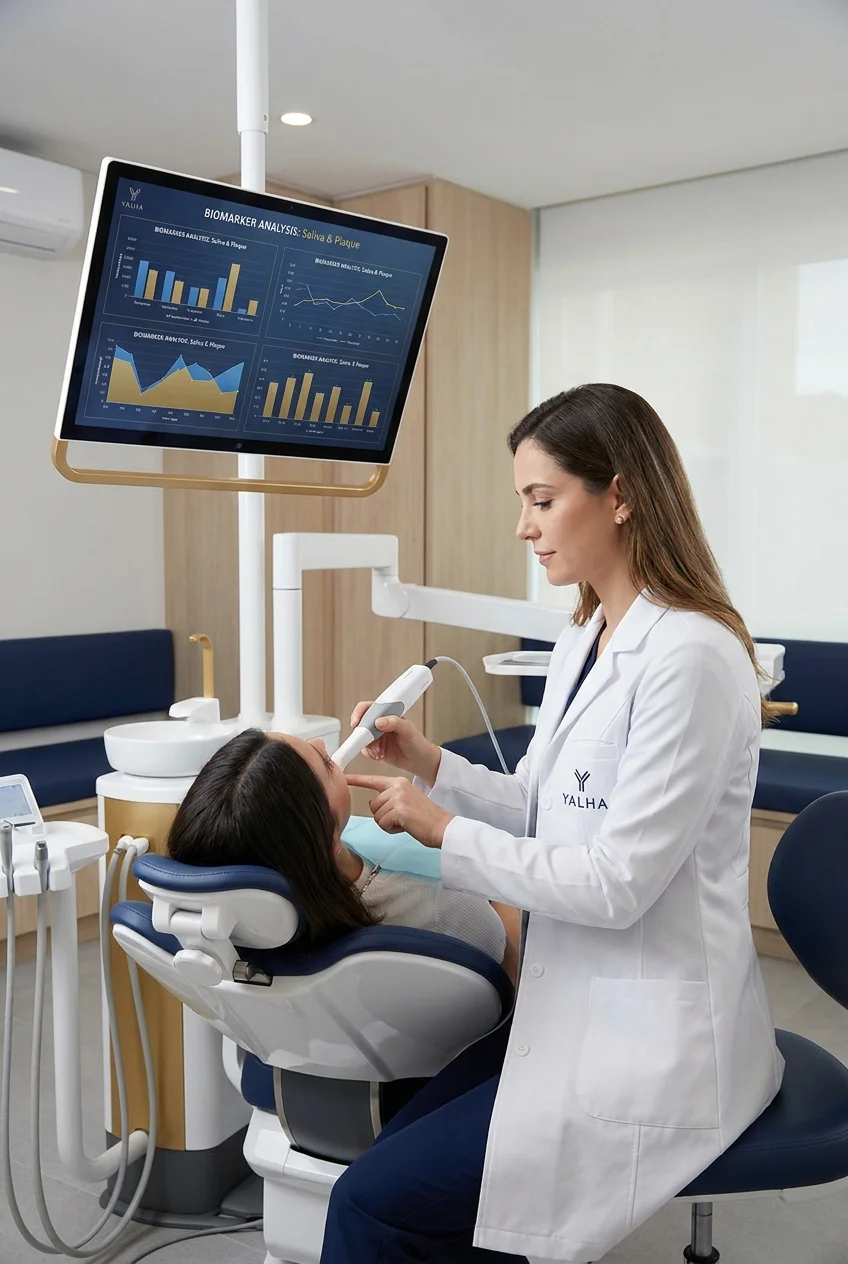
Systemic screening
The dental practice,
an advanced post of prevention
an advanced post of prevention
300 studies published in 2024 on salivary diagnostics (PubMed)
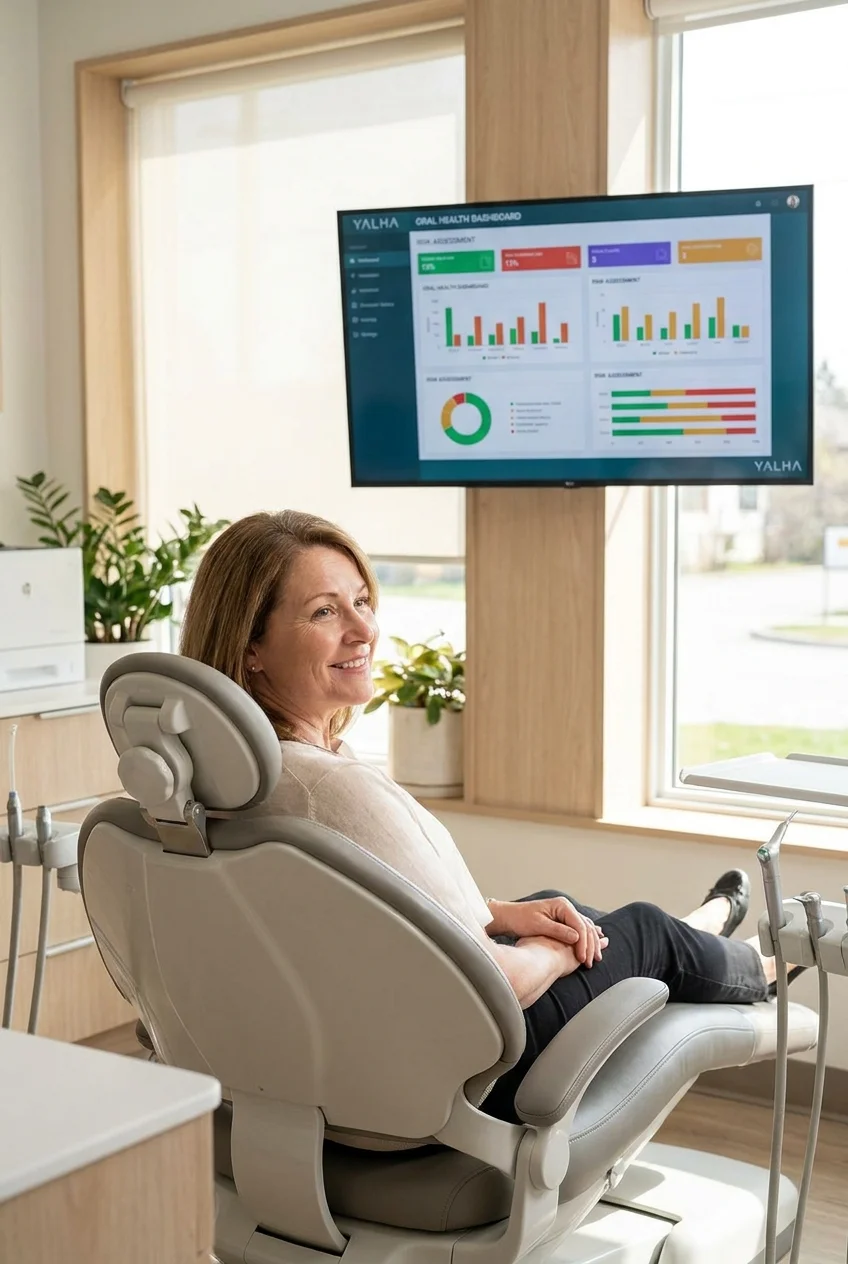
The signal no one reads
Oral biomarkers and systemic diseases
Saliva contains more than 3,000 proteins, thousands of metabolites, bacterial DNA, and inflammatory markers. In 2024, nearly 300 studies on PubMed explored its diagnostic potential — six times more than in 2014. The mouth is not an isolated organ: it is an open window onto the entire body.
3,000+proteins identified in human saliva
×6increase in salivary studies in 10 years
50%of diabetics undiagnosed worldwide
+19%cardiovascular risk with periodontitis
"Salivaomics turns an ordinary fluid into a precision diagnostic tool."
YALHA · What the mouth reveals
Biomarkers · 07
Five conditions, one same warning signal
Chronic periodontitis is not only a gum disease. It is a systemic inflammatory focus documented in the literature as a risk factor or early marker for five major conditions. Here is the state of the evidence.
01
Alzheimer's
P. gingivalis identified in the brains of AD patients. Gingipains correlated with tau. Salivary biomarkers Aβ42 and tau detectable. (Dominy et al., Science Advances, 2019)
02
Parkinson's
Oral-gut-brain axis documented in 2025 (114 subjects). ×1.7 risk of neurodegenerative disease with periodontitis. Oral dysbiosis as a potential biomarker.
03
Diabetes
Bidirectional relationship established. 1/3 of periodontal patients with unrecognized pre-diabetes. Chair-side HbA1c screening validated (Clinical Oral Investigations, 2019).
04
Cardiovascular & Depression
CVD: OR 1.19-1.22, periodontal treatment reduces CRP. Depression: OR 1.30 (2025 meta-analysis, 53 studies, bidirectional relationship confirmed).
Sources: Dominy et al., Sci. Adv. 2019; Chen et al., J. Parkinsons Dis. 2023; Kloeckner et al., Community Dent. Oral Epidemiol. 2025; Frontiers Cardiovasc. Med. 2023; Acta Diabetologica 2026. All meta-analyses cited are accessible on PubMed.
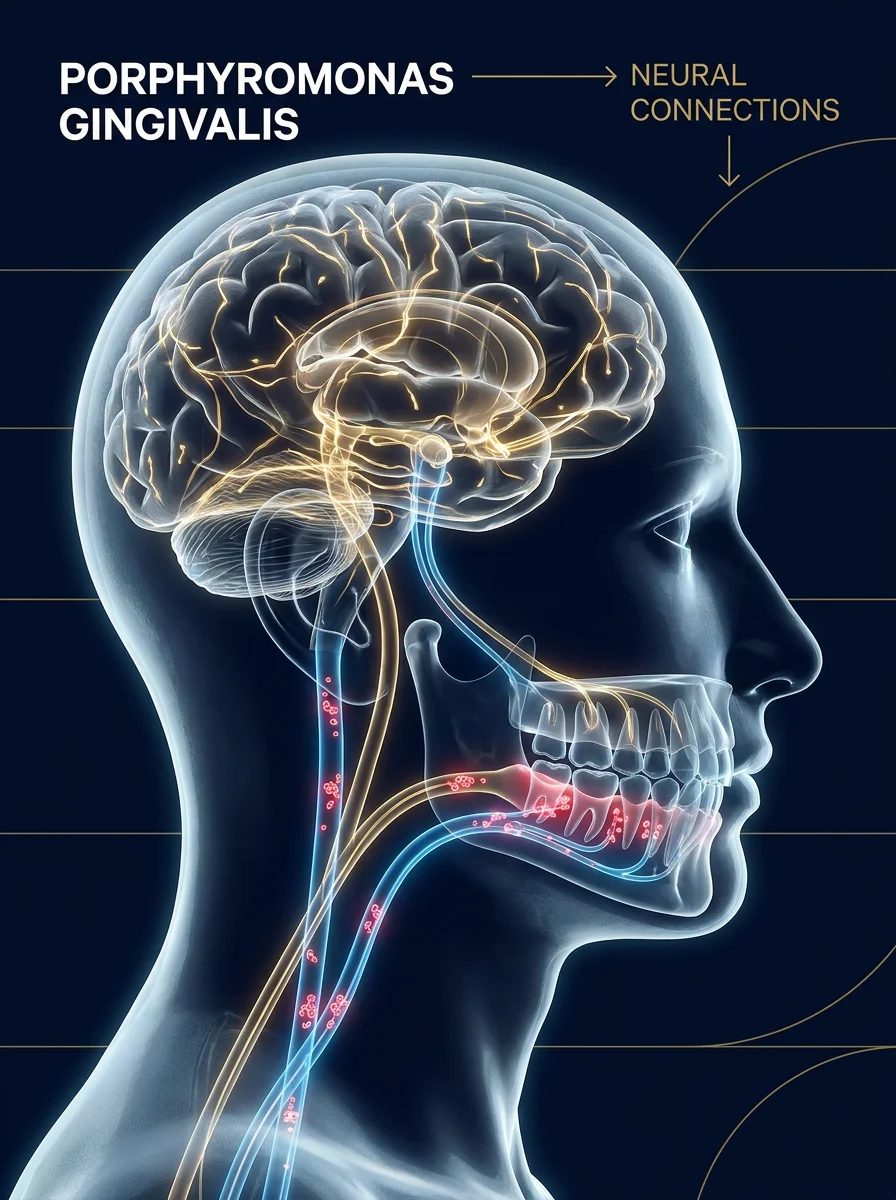
From gum to brain
How P. gingivalis reaches brain tissue
In 2019, an international team published in Science Advances the discovery of Porphyromonas gingivalis in the brains of patients with Alzheimer's disease. Here are the three documented mechanisms.
-
Direct invasion
P. gingivalis crosses the blood-brain barrier. In mice, oral infection leads to brain colonization and increased production of Aβ1-42, a component of amyloid plaques. [1]
-
Chronic neuro-inflammation
Gingipains (bacterial proteases) trigger an inflammatory cascade in brain tissue. Their levels correlate with tau protein and ubiquitin load. [1]
-
Oral-gut-brain axis
2025 study (114 subjects): the oral microbiome influences the gut microbiome through the daily swallowing of 1.5 L of saliva. Oral dysbiosis propagates and alters the gut-brain axis implicated in Parkinson's. [2]
Sources: [1] Dominy et al., Porphyromonas gingivalis in Alzheimer's disease brains: Evidence for disease causation, Science Advances 2019 (PMID: 30746447). [2] Gut Microbes 2025 (PMID: 40420833) — Microbiome signatures of virulence in the oral-gut-brain axis influence Parkinson's disease.

Founder's vision
The practitioner as a sentinel
The dentist sees their patients two to four times a year. They have access to saliva, the periodontium, the oral microbiome. They hold a biological observation post unique in the care pathway.
Yalha integrates systemic screening tools into its ecosystem: periodontal risk scores correlated with systemic conditions, contextual clinical alerts, and traceability of weak signals. Not to diagnose, but to orient and collaborate with the relevant specialists.
Founder & CEO · DAM Intelligence
Participant WHO Europe · Public Health Innovation
MOET UAE Delegation · SPIEF 2026 Saint Petersburg
GITEX 2025 · WHS Dubai 2026
Speaker · Cabinet IA 3.0 Biarritz 2026
YALHA · What the mouth reveals
Screening · 10
Screening at the chair
Diabetes and cardiovascular disease
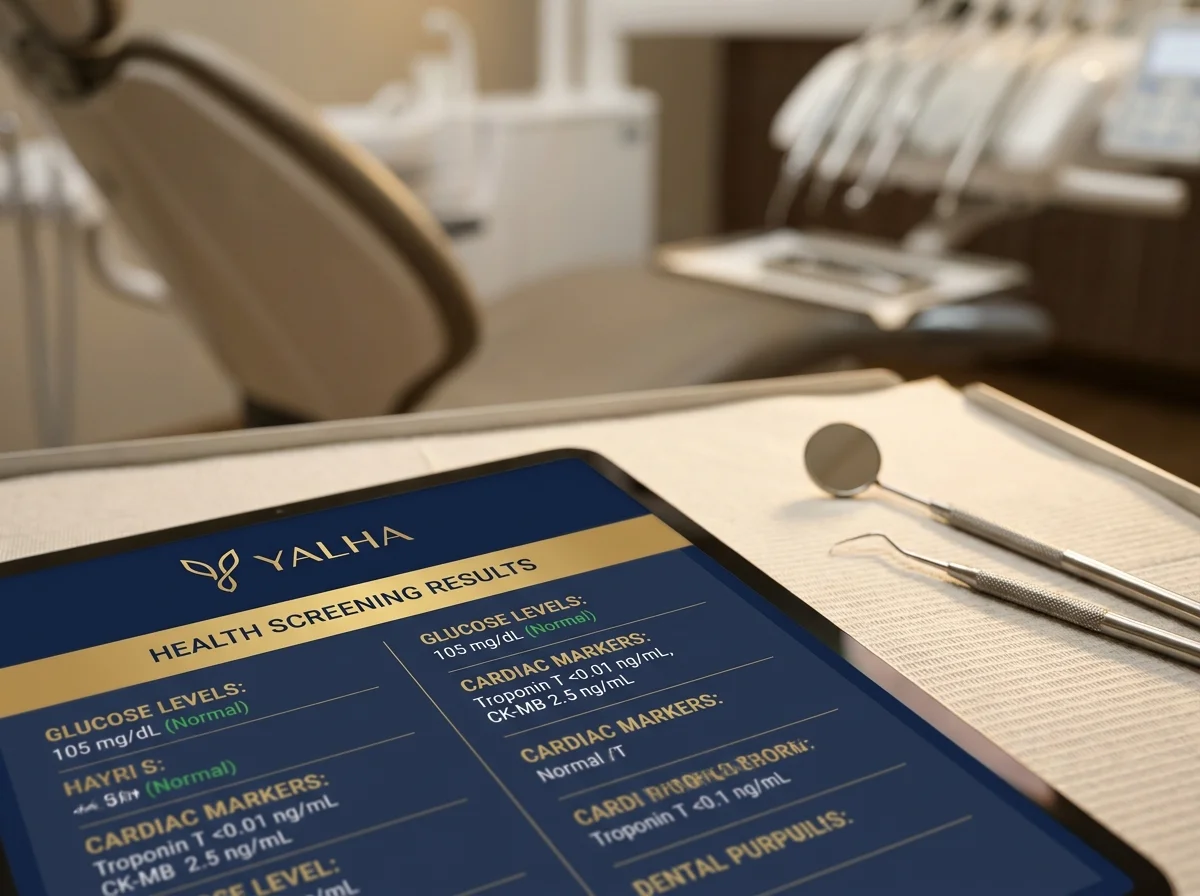
Half of all diabetics worldwide are unaware of their status. The dental practice, consulted regularly and equipped for simple sampling, represents an underused screening point at population scale.
-
01
HbA1c at the chair Finger prick, result in 5 min. 2025 study: feasible as routine in a dental practice (260 patients tested).Validated
-
02
Predictive periodontal score Pocket depth + bleeding + attachment loss = direct correlation with elevated HbA1c and CV risk.Documented
-
03
Salivary CRP Inflammatory marker linked to cardiovascular risk, detectable in saliva without blood draw.Research
-
04
Salivary glucose Documented correlation with blood glucose. Potential for non-invasive continuous monitoring.Emerging
-
05
Diagnostic miRNAs miR-146a, miR-155, miR-200b identified as biomarkers in gingival crevicular fluid for diabetes + periodontitis.Research
"One third of patients seen in a periodontal practice show an HbA1c in the diabetic or pre-diabetic range without knowing it." — Strauss et al., Clin. Oral Investig. 2019
Sources: [1] Estrich et al., Point-of-care glycemia testing in a safety-net dental care setting, JADA 2025 (PMID: 40057856). [2] Strauss et al., Prevalence of undiagnosed diabetes and pre-diabetes in chronic periodontitis, Clin. Oral Investig. 2019 (PMID: 30937539). [3] Medicina 2025;61(2):243 — Saliva as a Diagnostic Tool for Systemic Diseases. [4] Diagnostics 2024 (PMC11477124) — miRNAs as Epigenetic Biomarkers, Type 2 DM and Periodontitis.
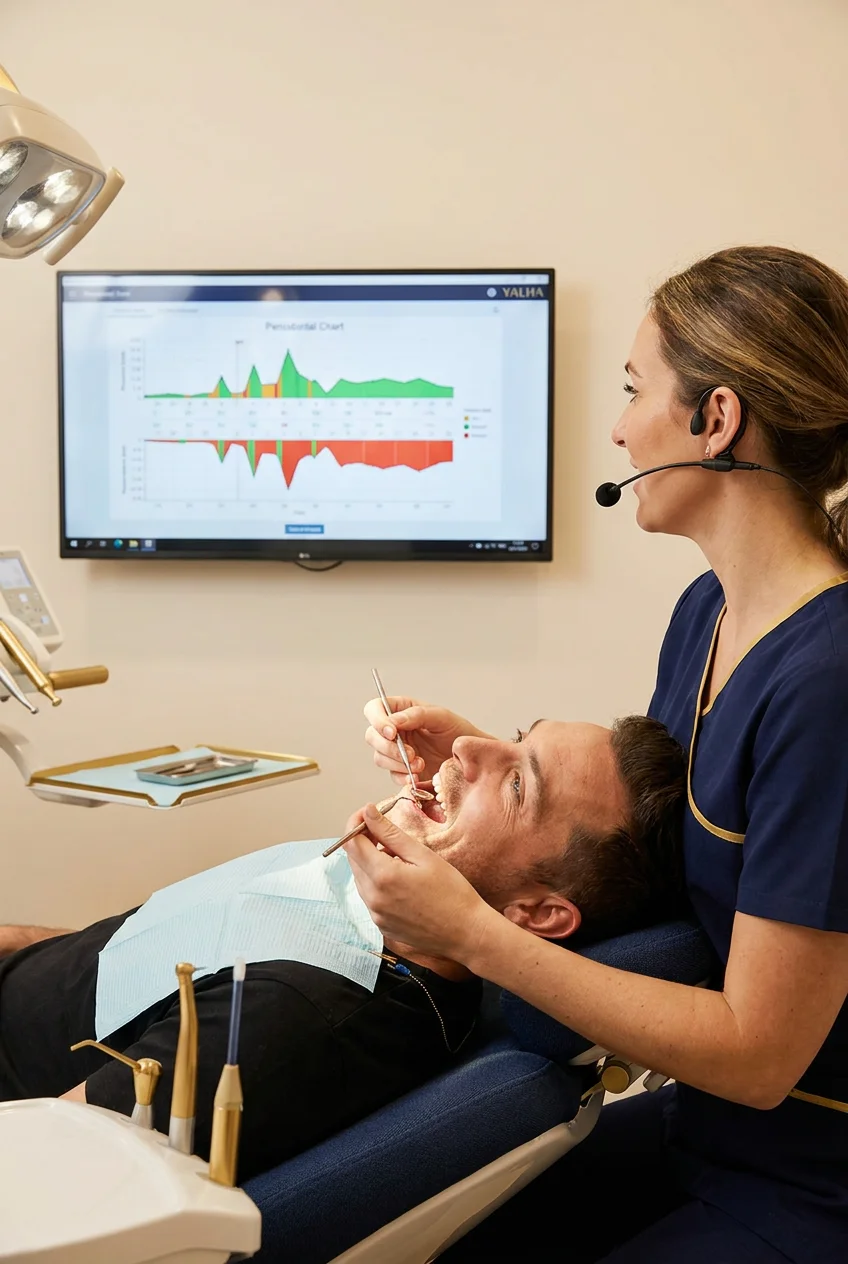
Yalha module
Hands Free
Anamnesis · Oral exam · Periodontal charting
Yalha module · Focus
Hands Free
The practitioner speaks, Yalha structures. Anamnesis, oral exam and complete periodontal charting by voice dictation. No more need to put down the probe to enter a number.
6
sites per tooth
3 buccal, 3 lingual/palatal
3 buccal, 3 lingual/palatal
0
probe interruption
everything is dictated continuously
everything is dictated continuously
The problem solved
Today, periodontal charting requires an assistant at the chair. The practitioner dictates, the assistant types. Every measurement interrupts the clinical gesture. The assessment of a severe periodontal patient takes 30 to 45 minutes, half of which is lost on data entry. The dental assistant is locked at the keyboard instead of anticipating instrumentation or preparing the next step.
With "Hands Free", the practitioner dictates continuously without taking their eyes off the patient's mouth. Voice recognition interprets the measurements in real time: probing depth, gingival margin, BOP, plaque, mobility, furcation, implants. Yalha fills out the chart automatically.
The effect on organization
The dental assistant returns to their real role: preparing trays, anticipating gestures, managing patient flow. They are no longer a chair-side secretary. The time saved is immediate: a full periodontal assessment that took 40 minutes drops to 20. The DA is freed for other tasks.
This recovered time does not vanish. It converts into additional procedures, into exchanges with the patient, into documentation quality. The practice produces more, with less friction.
The patient effect
The patient sees a focused, technological, modern practitioner. They do not see someone who stops every 10 seconds to dictate to an assistant hunched over a screen. The "WOW" effect is real: the patient perceives leading-edge, fluid, uninterrupted care. Trust settles in immediately.
What the patient takes away: "My dentist never lets go of the probe; he talks to his software and everything fills itself in." This is invisible technology — the kind that has the most impact on the practice's image.
Automatic PRA and SPT
At the end of the charting, Yalha automatically computes the PRA (Periodontal Risk Assessment) score and the SPT (Supportive Periodontal Therapy) classification. No more manual calculation, no more omission. The score directly feeds the systemic risk alert described in this volume: a patient with a high PRA is also a patient to monitor for diabetes and cardiovascular disease.
The module also covers medical anamnesis and full oral examination. The practitioner dictates their observations (mucosal lesions, occlusion, TMJ, wear), Yalha structures them in the record. A single voice flow, three documented procedures.
Periodontal charting is no longer a logistical chore. It is a fluid clinical gesture that generates usable data.
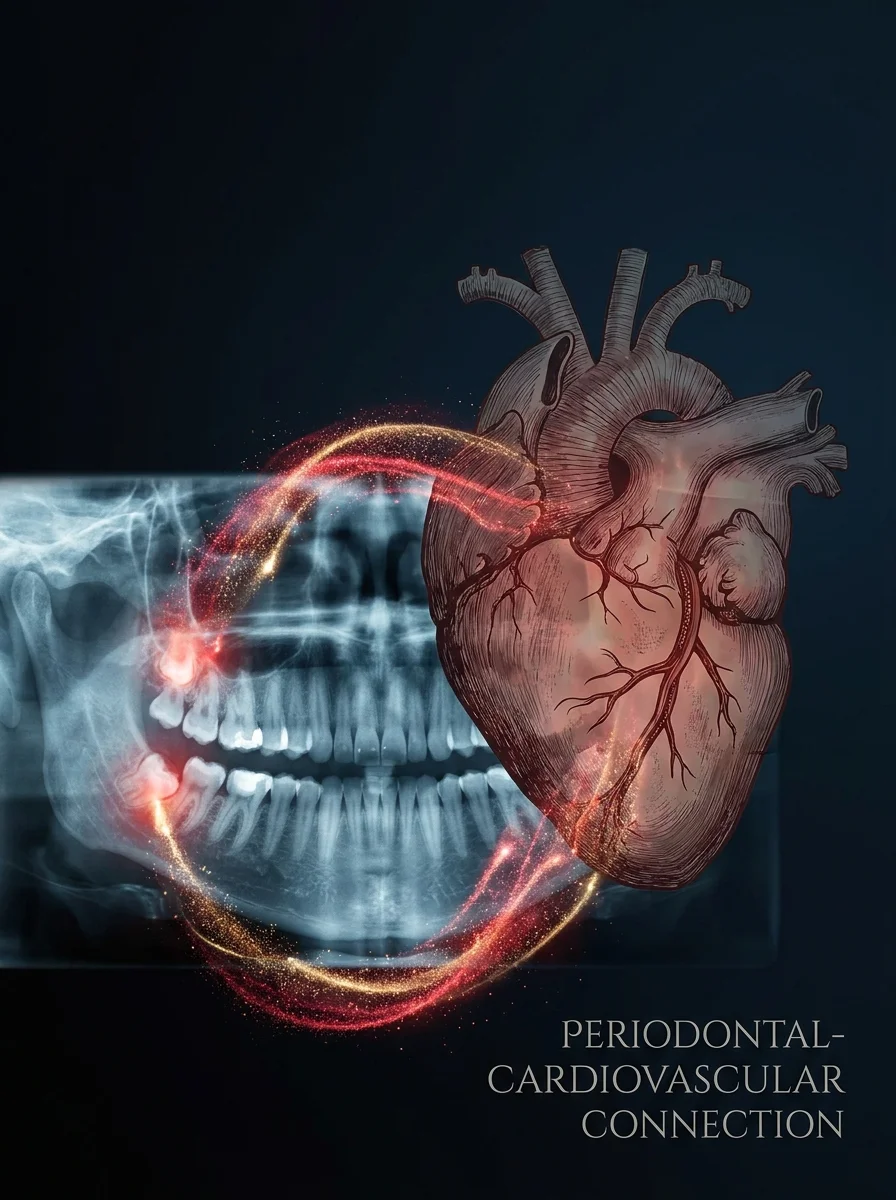
The mouth and the mind
Depression, cardiovascular health and oral inflammation
The most recent meta-analysis (2025, 53 studies) confirms what clinicians intuitively observe: oral health and mental health are linked.
Depressed patients show an odds ratio of 1.30 for periodontitis, 1.32 for cavities, and 1.26 for edentulism. The relationship is bidirectional: depression degrades hygiene and salivary immunity, while chronic pain and periodontal inflammation worsen depressive symptoms.
- OR 1.30 for periodontitis in depressed patients (Kloeckner et al., 2025)
- CV risk +19-22% with periodontitis (Frontiers Cardiovasc. Med., 2023)
- Periodontal treatment: CRP reduction in 78% of clinical trials
- WHO: depression will be the leading cause of morbidity by 2030
YALHA · What the mouth reveals
Whole-body health · 13
Treating the mouth is treating the body
Periodontal inflammation as a systemic therapeutic target
Periodontal treatment is not limited to saving teeth. Clinical trials show measurable effects on systemic markers.
Impact of periodontal treatment
A systematic review of clinical trials shows that periodontal treatment reduces C-reactive protein (CRP) in 78% of cases, interleukin-6 in 100% of studies, and improves fibrinogen in 67% of cases. These markers are directly correlated with cardiovascular risk.
The virtuous circle of early screening
When a periodontal patient is referred for diabetes screening and pre-diabetes is detected, early intervention (lifestyle changes, glucose monitoring) prevents progression to type 2 diabetes. The cost of a chair-side HbA1c test is negligible compared to the cost of untreated diabetes over five years.
"We are not asking the dentist to diagnose Alzheimer's. We are giving them the means to spot a signal and refer. This is prevention, not general medicine."
The role of technology
Artificial intelligence now allows periodontal data, medical history and biological markers to be cross-referenced to generate a personalized risk score. Yalha embeds this logic in its clinical flow: the practitioner receives a contextual alert, not a diagnostic instruction.
Dr. Jean-Guillaume Capsal · Dental surgeon · CEO, DAM Intelligence
Practitioner testimonial
Dr. Laurianne Bas
Dental surgeon
"
Being able to also analyze screenshots of optical impressions is a real asset, as it allows color to be integrated and further enriches the quality of the diagnosis.

Clinical Advisory Board
Four clinicians,
one standard.
one standard.
Dr. Bougault · Dr. Capsal · Dr. Dersot · Dr. Braëms
YALHA · What the mouth reveals
Tribune · 16
The dentist, sentinel of systemic health
A plea for a dentistry integrated into the care pathway
The dental surgeon is probably the most regularly consulted healthcare professional in France. And yet, their role in the prevention of systemic diseases remains nearly nonexistent in official recommendations.
We now have enough scientific evidence to state that the oral cavity is a reliable marker of overall health. Periodontitis correlates with diabetes, cardiovascular disease, neurodegenerative disease and depression. Saliva contains biomarkers usable for the early detection of these conditions.
What is missing is not science. It is infrastructure. The clinical tools that allow the practitioner to collect, interpret and transmit these signals within the framework of their daily practice. Without disproportionate additional training, without extra administrative burden, without stepping outside their scope of competence.
Yalha is building this infrastructure. An ecosystem where periodontal data automatically generates systemic risk alerts, where the practitioner can refer the patient to their primary physician with a structured report, and where traceability protects everyone.
YALHA · What the mouth reveals
17
Quote
"
The mouth is not a minor organ. It is the first checkpoint the body offers to medicine, and the only one consulted twice a year.
YALHA · Open tribune
Tribune · 18
Guest tribune
Periodontitis is not
a local disease.
A periodontist and court-appointed expert facing oral biomarkers.
For thirty years, I have treated periodontitis. For twenty years, I have been a court-appointed expert at the Court of Appeal of Pau. These two roles have taught me the same thing: what we see in a mouth goes far beyond the boundaries of the oral cavity.
Periodontitis is a chronic inflammatory disease. Its mediators circulate throughout the body. Periodontopathogenic bacteria do not stay confined to gingival pockets: they enter the bloodstream with every brushing, every mastication, every scaling. The resulting chronic endotoxemia fuels a low-grade systemic inflammation whose effects on the brain, the heart and metabolism are now documented.
As a periodontist, I measure every day pocket depth, attachment level, bleeding index. These numbers are not only periodontal indicators. They are indirect markers of systemic risk. The literature says so. Our practice must integrate it.

Tribune · Guest
Dr. Jean-Marc Dersot
Periodontist
Court-Appointed Expert at the Court of Appeal of Pau
Court-Appointed Expert at the Court of Appeal of Pau
YALHA · Dersot Tribune
20
Quote
"
Periodontitis is the inflammatory background noise the body sends from the mouth. It is time medicine learns to listen.
YALHA · Dersot Tribune
Tribune · 21
Documenting inflammation
is protecting the patient.
The question is no longer whether periodontitis has systemic consequences. The question is why we are not yet systematically documenting it.
In the expert files I examine, the court increasingly asks whether the practitioner identified the risk factors, whether they documented them, whether they referred the patient. A severe periodontal patient who develops type 2 diabetes or a cardiovascular event within five years raises a traceability question our profession must anticipate.
Periodontal documentation can no longer be limited to charting. It must include the medical context, the risk factors identified, the referrals proposed. A periodontal score correlated with systemic risk, integrated into the patient record, is not a technological luxury. It is professional prudence.
What we measure every day in periodontal pockets is also a signal the body sends about the state of its arteries, its brain, its metabolism.
The tool Yalha is developing goes in this direction. By cross-referencing periodontal data with medical history and generating risk alerts, it turns a routine examination into an act of systemic prevention. Without overloading the practitioner, without stepping outside their scope of competence.
21st-century medicine will be preventive and integrated, or it will not be. The periodontist, by the very nature of their practice, is on the front line of this transformation. It is time our tools reflected this reality.
Dr. Jean-Marc Dersot
Periodontist · Court-Appointed Expert at the Court of Appeal of Pau

Practitioner testimonial
Dr. Olivier Braëms
Oral surgeon · Clinical Advisory Board
"
At last, a system that frees us from time-consuming administrative constraints. Clinical reports, treatment plans, estimates, informed consents… everything is generated rigorously, with no risk of omission. An indispensable tool to save precious time while optimizing patient communication through the CheckMyTeeth application. We can finally focus fully on delivering care.

"
Every periodontal exam is an opportunity for systemic screening. Technology must make this gesture natural, not optional.
Intended use
This document explores the scientific links between oral health and systemic diseases. It presents the state of research and technological perspectives. It does not constitute a medical protocol or a screening recommendation in the absence of an appropriate regulatory framework.
Document for professional use · Does not constitute medical advice
Discover
·
yalha.com
contact@yalha.com